Growing Wandflower 'Whirling Butterflies' in a pot
For balcony, patio or terrace — Gaura lindheimeri 'Whirling Butterflies'
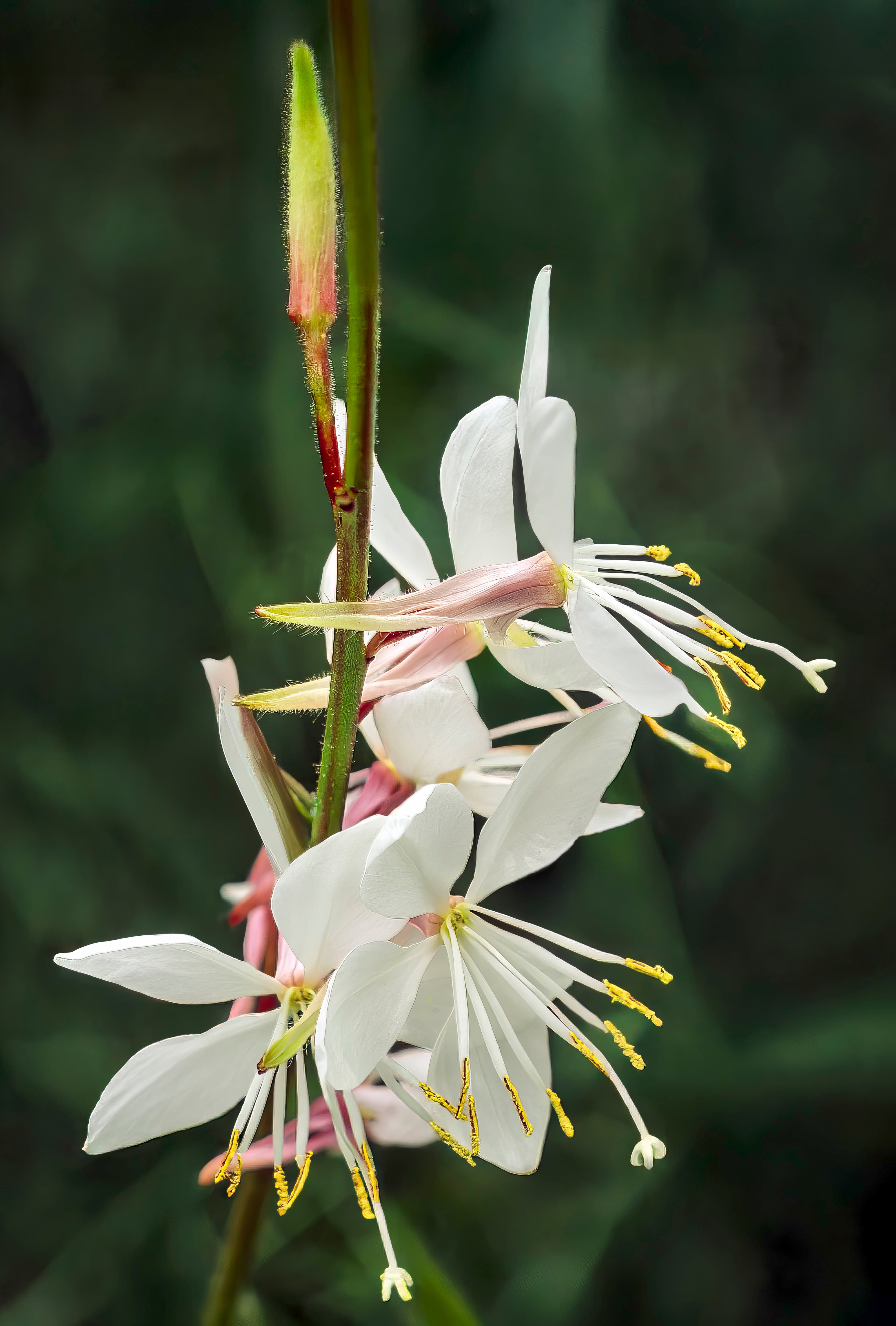
wandflower 'Whirling Butterflies' grows well in a pot of at least Ø 30 cm (21 L capacity), in a position with full sun or partial shade. Watering: 1-2x per week in summer, only when dry in winter.
Which pot?
Ø 30 cm
~ 21 L potting soil
Give the plant room with a pot slightly wider than the current rootball, with matching depth.
Watering
1-2x per week
only when dry
Always use a pot with drainage holes. Water dries out faster in pots — or the plant drowns. Check weekly with your finger: only water when the top 2 cm of soil is dry.
Pot care
Once established, gaura is remarkably low-maintenance and drought-tolerant. Water newly planted specimens regularly through their first summer to help roots settle, but thereafter water only during prolonged dry spells. Overwatering or poorly drained soil is the main cause of failure; gaura evolved on the American prairies and copes far better with drought than with soggy conditions. Feed lightly in April or May with a general-purpose granular fertiliser or a handful of blood, fish and bone scattered around the base. Avoid high-nitrogen feeds, which promote lush foliage at the expense of flowers. One feed per year is sufficient; overfed gaura becomes floppy and prone to flopping. In poor, sandy soils a second light feed in early summer can be beneficial, but in average garden loam it's unnecessary. Gaura is generally pest- and disease-free. Occasionally aphids cluster on young shoots in spring; a strong jet of water or a spray of insecticidal soap deals with them. In wet summers or heavy soils, root rot or crown rot can occur—there's no cure, so prevention through good drainage is essential. Powdery mildew may appear on foliage in late summer, especially in dry conditions; it's unsightly but rarely fatal, and the plant usually outgrows it. Hardiness is good in zones 6–9, but wet winter soil is more dangerous than cold. Ensure drainage remains sharp, and avoid mulching with moisture-retentive materials. In colder or exposed gardens, a gravel mulch and the shelter of a south-facing wall improve winter survival. Gaura is short-lived in heavy soils but can persist for years in the right spot.
Pot-specific tip: add slow-release fertiliser pellets in March — potting soil exhausts much faster than open ground.


