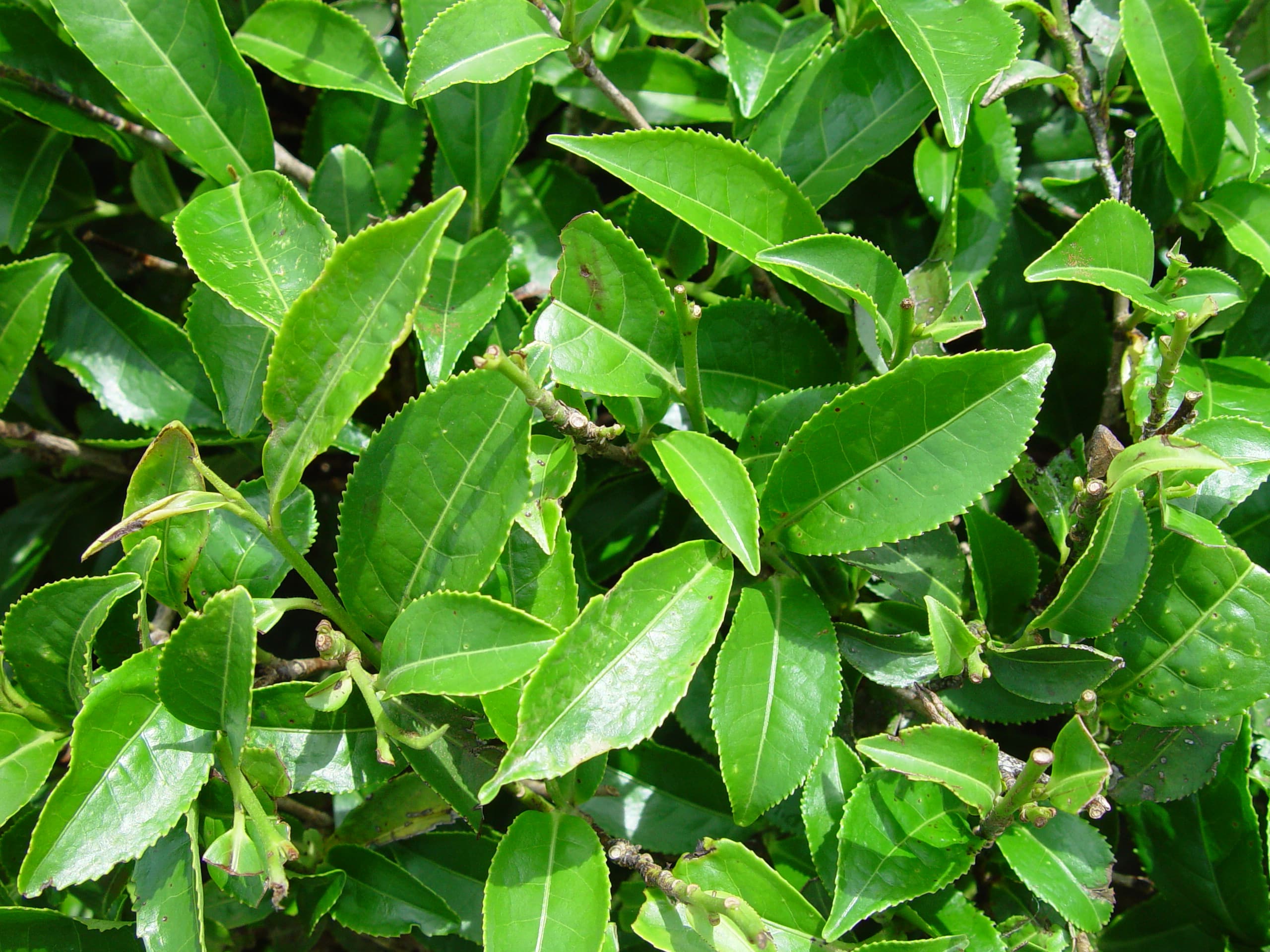
Tea plant
Camellia sinensis
Dutch: Theeplant
Not winter-hardy
Tea plant doesn't survive Dutch winters outdoors. Grow it as a patio/container plant: outside in summer, then overwinter frost-free (indoors or a cool, light space). It also does well as a houseplant.
Theeplant (Camellia sinensis) is a evergreen, edible shrub from the Theaceae family that grows up to 200cm tall. This plant thrives in partial shade to full sun and requires moderate maintenance. Blooms in autumn with white flowers and attracts bees.
60–200 cm
60–150 cm
partial shade, full sun
moderate
peat soil, loam
moderate maintenance
autumn
white
Ecologische waarde
Verzorgingskalender
| Taak | Jan | Feb | Mrt | Apr | Mei | Jun | Jul | Aug | Sep | Okt | Nov | Dec |
|---|---|---|---|---|---|---|---|---|---|---|---|---|
| 🌱Planten | ||||||||||||
| ✂️Snoeien | ||||||||||||
| 💧Bemesten | ||||||||||||
| 🍎Oogsten |
Care tips
Planting
Camellia sinensis thrives in a large container rather than open ground in temperate Europe, as it needs to be moved indoors before the first frosts. Choose a pot at least 40 cm in diameter with excellent drainage holes. Use ericaceous (acid) compost or a mix of loam and peat-based compost; tea plants demand acidic soil and will suffer in alkaline conditions. Position your tea plant in partial shade or morning sun with shelter from harsh afternoon light and strong winds. A spot on a patio or terrace that receives dappled light is ideal. Full sun is tolerated only if the plant is kept consistently moist and not exposed to scorching midday heat. Plant in May once all risk of frost has passed, or in September while the soil is still warm. If potting a young plant, set it at the same depth it sat in its nursery pot—burying the stem too deeply encourages rot. Firm the compost gently around the roots and water thoroughly to settle the mix and eliminate air pockets. Space plants 100 cm apart if you're growing several in a row of containers. After planting, apply a 3–5 cm layer of ericaceous mulch (pine bark or composted pine needles work well) to conserve moisture and maintain acidity. Water again if the top few centimetres of compost dry out in the first fortnight. Avoid using tap water in hard-water areas; rainwater is far better for acid-loving camellias. Stake young specimens loosely if they're top-heavy, but most tea plants develop a sturdy, bushy framework without support.
Pruning
Prune your tea plant in March or April, just as new growth begins but before the main flush of spring leaves. Pruning at this time encourages a dense, bushy shape and maximises the number of tender young shoots you can harvest for tea later in the season. Use clean, sharp secateurs or pruning shears. Start by removing any dead, damaged, or frost-nipped stems back to healthy wood. Then look for crossing or inward-growing branches that clutter the centre of the shrub; opening up the canopy improves air circulation and reduces the risk of fungal problems in damp weather. Tea plants respond well to moderate pruning. You can safely cut back up to one-third of the previous year's growth to maintain a compact, manageable size—especially important for a container specimen. Trim wayward shoots to shape the plant and encourage branching lower down. If your tea plant has become leggy or overgrown, don't be afraid to prune harder; Camellia sinensis tolerates rejuvenation pruning and will reshoot from older wood, though flowering and cropping will be lighter the following year. During the growing season, pinch out the tips of young shoots if you want to promote bushier growth, but remember that these tender tips are exactly what you harvest for tea. After the autumn flowering period, deadhead spent white blooms if you wish, though this is purely cosmetic—tea plants don't require deadheading to perform well. Avoid any pruning after late spring, as this removes the shoots you'd otherwise pick for tea in May, June, and July.
Maintenance
Water your tea plant regularly from spring through summer, keeping the compost consistently moist but never waterlogged. In hot weather you may need to water every couple of days; check by feeling the top 3 cm of compost. Reduce watering in autumn and winter when growth slows, allowing the surface to dry slightly between waterings. Always use rainwater or soft water if possible, as tea plants are sensitive to the lime in hard tap water. Feed in April and again in June with a liquid ericaceous fertiliser (the type sold for rhododendrons and azaleas) at the strength recommended on the bottle. Avoid feeding after midsummer, as soft late growth is more vulnerable to frost damage when you bring the plant indoors. Before the first frosts—usually late October or early November—move your tea plant into a frost-free greenhouse, conservatory, or bright porch. It needs cool overwintering (ideally 5–10 °C) and good light; a heated living room is too warm and dry. Ventilate on mild days to prevent fungal issues. Return the plant outdoors in late April or May once night temperatures stay reliably above 5 °C. Refresh the top 5 cm of compost each spring and repot every two to three years into a slightly larger container if roots fill the pot. Tea plants are generally trouble-free, but watch for vine weevil notching on leaf edges (check compost for grubs) and scale insects on stems. Overwatering or poor drainage causes root rot; yellowing leaves between the veins usually signal iron deficiency due to alkaline compost or hard water.
Buy this plant
Theeplant (Camellia sinensis) — kweek je eigen thee
Browse the range at PlantcentraalPlantcentraal is our own webshop.
More about this plant
Combines well with
Related guides
Tea plant in your garden design?
Make a free garden design with AI advice. Our AI knows Tea plant and 130+ other plants.
Start free design