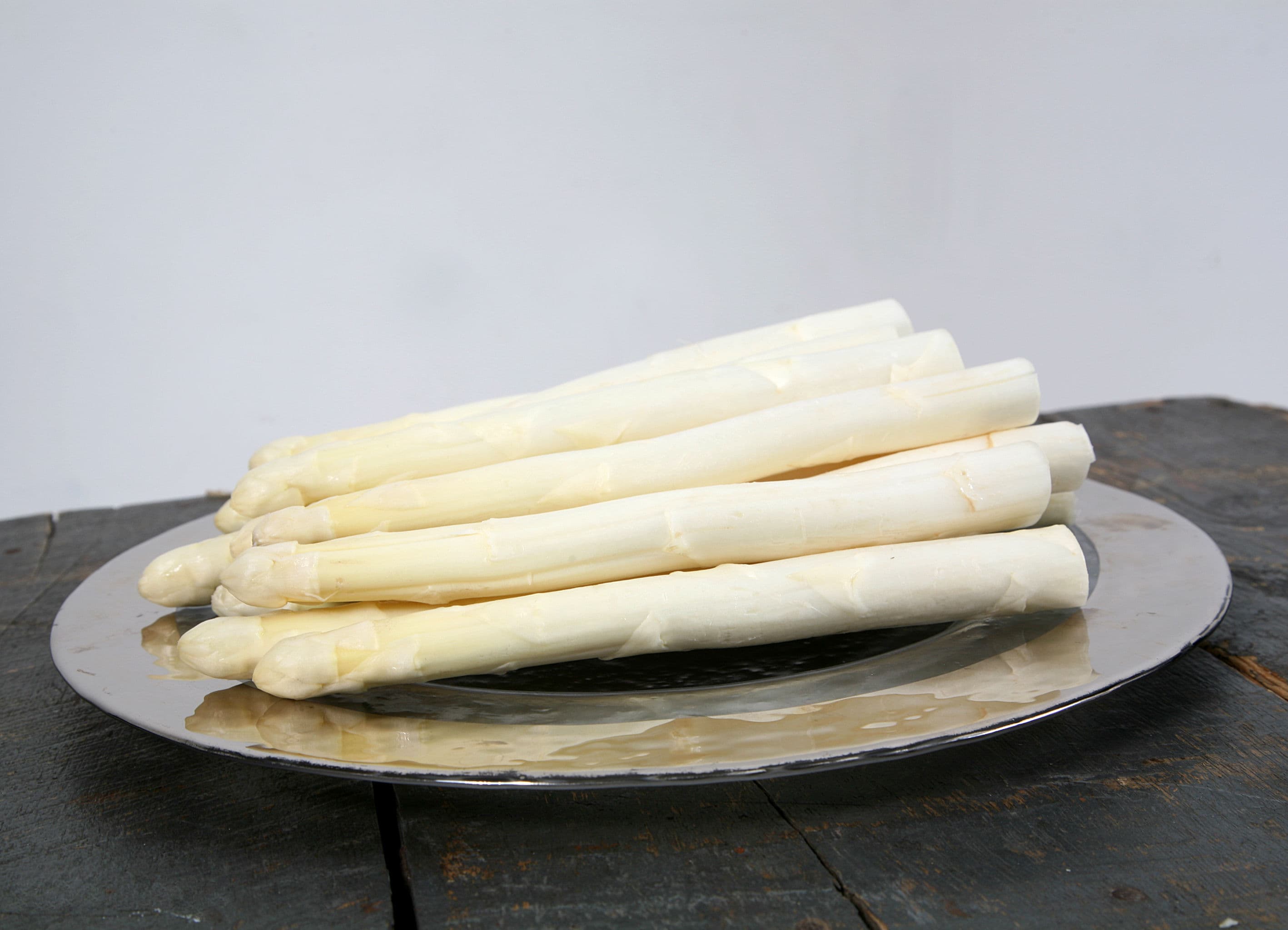
Asparagus
Asparagus officinalis
Dutch: Asperge
Asperge (Asparagus officinalis) is a edible vegetable from the Asparagaceae family that grows up to 150cm tall. This plant thrives in full sun and requires moderate maintenance. Blooms in summer with yellow flowers and attracts bees.
100–150 cm
30–50 cm
full sun
moderate
sandy soil, loam
moderate maintenance
summer
yellow
Ecologische waarde
Verzorgingskalender
| Taak | Jan | Feb | Mrt | Apr | Mei | Jun | Jul | Aug | Sep | Okt | Nov | Dec |
|---|---|---|---|---|---|---|---|---|---|---|---|---|
| 🌱Planten | ||||||||||||
| ✂️Snoeien | ||||||||||||
| 💧Bemesten | ||||||||||||
| 🍎Oogsten |
Care tips
Planting
Asparagus thrives in full sun and well-drained soil, ideally sandy loam that warms quickly in spring. Choose a permanent site carefully—an asparagus bed can remain productive for fifteen to twenty years. Avoid heavy clay or waterlogged ground, which encourages root rot. Before planting, dig the bed deeply and work in plenty of well-rotted manure or compost to improve fertility and drainage. Plant asparagus crowns (one-year-old roots) in March or April when the soil has warmed. Dig a trench about 20 cm deep and 30 cm wide. Create a low ridge of soil along the bottom of the trench, then drape each crown over the ridge so the roots spread downwards and outwards. Space crowns 40 cm apart within the row, and leave at least 90 cm between rows if planting more than one. Cover the crowns with 5–8 cm of soil initially, then gradually fill in the trench as the fern-like shoots emerge over the following weeks, until the bed is level. Water the newly planted crowns thoroughly to settle the soil and encourage root establishment. Keep the bed consistently moist through the first growing season but avoid waterlogging. Apply a 5 cm layer of well-rotted compost or manure as mulch after planting to suppress weeds and retain moisture. Do not harvest any spears in the first year; allow all growth to develop into ferny foliage, which feeds the crown and builds strength for future crops. In the second year, harvest lightly for two to three weeks only. From the third year onwards, you can harvest normally for six to eight weeks each spring.
Pruning
Asparagus requires minimal pruning, but the ferny foliage must be cut back once a year to keep the bed tidy and reduce pest and disease carryover. In November, after the ferns have turned yellow or brown and died back naturally, cut all stems down to ground level. Use clean, sharp secateurs or a pair of shears. Remove every stem completely—leaving stubs can harbour asparagus beetle eggs and fungal spores over winter. Rake up and dispose of all the cut foliage; do not compost it if you have seen any signs of asparagus beetle or rust disease during the growing season, as these problems can persist in plant debris. Timing is important. Cutting back too early, while the foliage is still green, deprives the crown of energy it needs to store for next year's spear production. Wait until the ferns are fully senesced. If autumn gales flatten the foliage before November, you can cut back slightly earlier, but aim to leave it as long as practical. During the harvest season in April, May, and June, you are effectively "pruning" by cutting spears. Harvest when spears are 12–18 cm tall and still tightly budded at the tip, using a sharp knife to cut 2–3 cm below soil level, or snap them off at ground level. Stop harvesting by late June to allow the remaining spears to grow into ferns that will replenish the crown. No other pruning is needed through summer; simply let the foliage grow tall and feathery to maximise photosynthesis.
Maintenance
Asparagus needs moderate watering, especially during dry spells in the growing season. Water deeply once or twice a week from April through September if rainfall is scarce, aiming to keep the root zone moist but not saturated. Reduce watering once the ferns begin to yellow in autumn. In winter, the dormant crowns need little attention and will tolerate cold down to hardiness zone 3. Feed twice a year. In March, just as spears begin to emerge, apply a balanced granular fertiliser or a generous layer of well-rotted manure or compost around the crowns. This supports the intensive growth of harvestable spears. In July, after harvest has finished and the ferns are growing strongly, apply a second feed—use a general-purpose fertiliser or liquid tomato feed to help the crowns build reserves for next year. Avoid high-nitrogen feeds late in the season, which can encourage soft growth vulnerable to frost. Asparagus beetle is the main pest. Adults are black and red, and both they and their grey larvae chew foliage and spears. Check plants regularly from May onwards and pick off beetles and larvae by hand, or spray with an organic insecticide if numbers are high. Asparagus rust, a fungal disease causing orange pustules on stems, can weaken plants; remove and bin affected foliage promptly and ensure good air circulation. Mulch the bed each spring with a 5 cm layer of compost to suppress weeds and retain moisture. Hand-weed carefully to avoid damaging shallow crowns. Keep the bed weed-free year-round, as competition reduces spear quality and yield.
More about this plant
Combines well with
Related guides
Asparagus in your garden design?
Make a free garden design with AI advice. Our AI knows Asparagus and 130+ other plants.
Start free design