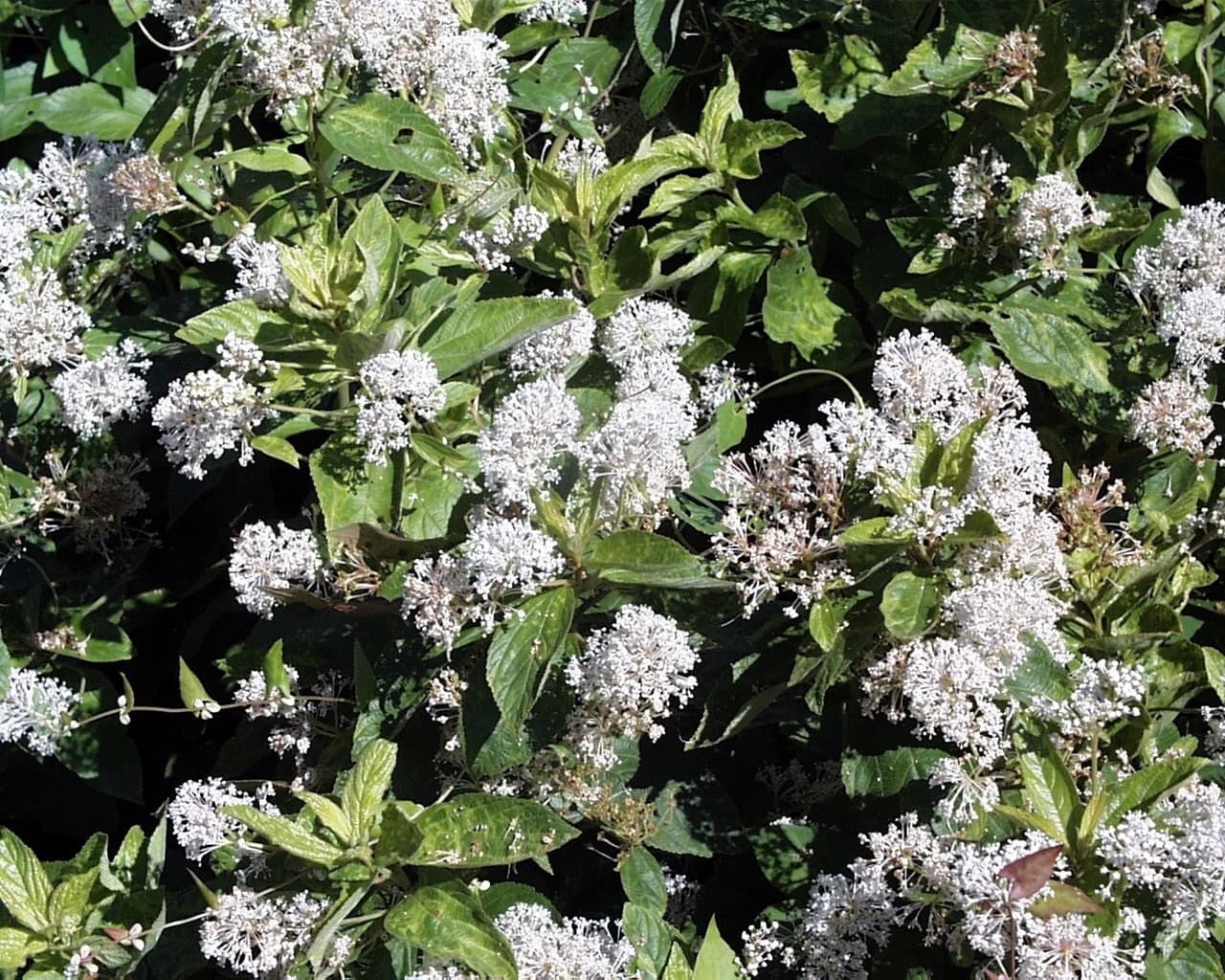
California Lilac
Ceanothus × delileanus 'Gloire de Versailles'
Dutch: Ceanothus
Ceanothus (Ceanothus × delileanus 'Gloire de Versailles') is a shrub from the Rhamnaceae family that grows up to 200cm tall. This plant thrives in full sun and requires moderate maintenance. Blooms in autumn and summer with blue flowers and attracts bees and butterflies.
150–200 cm
150–200 cm
full sun
low water needs
sandy soil, loam, chalky soil
moderate maintenance
autumn, summer
blue
Ecologische waarde
Verzorgingskalender
| Taak | Jan | Feb | Mrt | Apr | Mei | Jun | Jul | Aug | Sep | Okt | Nov | Dec |
|---|---|---|---|---|---|---|---|---|---|---|---|---|
| 🌱Planten | ||||||||||||
| ✂️Snoeien | ||||||||||||
| 💧Bemesten |
Care tips
Planting
California lilac thrives in full sun and well-drained soil, making it ideal for warm, sheltered spots in the garden. Choose a position that receives at least six hours of direct sunlight daily, ideally against a south- or west-facing wall where the plant benefits from reflected warmth and protection from cold winds. This cultivar is reasonably hardy in zones 7a–9b but appreciates shelter in colder areas. Soil preparation is crucial: California lilac performs best in sandy, loamy, or chalky soils with excellent drainage. Heavy clay soils often prove fatal, especially in wet winters. If your soil is heavy, improve drainage by incorporating plenty of horticultural grit or sharp sand, or consider planting on a slight mound. The plant tolerates alkaline conditions well, making it perfect for chalky gardens. Plant in April or May when the soil has warmed and the risk of hard frost has passed. Dig a hole twice the width of the root ball but no deeper—the top of the root ball should sit level with the surrounding soil. Loosen the roots gently if pot-bound. Backfill with the excavated soil without adding compost or fertiliser, as California lilac prefers lean conditions and too much richness encourages soft growth susceptible to frost damage. Space plants 150 cm apart to allow for their mature spread of 150–200 cm. After planting, water thoroughly to settle the soil around the roots, then apply a 5 cm layer of gravel or grit mulch around the base. This improves drainage at the collar and reflects heat. Avoid organic mulches, which retain too much moisture. Water sparingly in the first season during prolonged dry spells only.
Pruning
Ceanothus × delileanus 'Gloire de Versailles' flowers on the current season's growth, which makes it one of the easier California lilacs to prune. Prune in March or April, just as the buds begin to swell but before active growth starts. This timing allows the plant to produce plenty of new flowering shoots for summer and autumn blooms while avoiding frost damage to fresh cuts. Use clean, sharp secateurs or loppers for the job. The key is to cut back all the previous year's growth quite hard—reduce last season's stems to within 5–10 cm of the older framework, cutting just above an outward-facing bud. This encourages a compact, bushy shape and prevents the plant from becoming leggy and bare at the base, a common problem if left unpruned. Don't be timid: hard pruning in spring rejuvenates the plant and promotes vigorous flowering growth. Remove any dead, damaged, or crossing branches entirely, cutting back to healthy wood or the main framework. Also take out any weak or spindly shoots that won't flower well. If the plant has become overgrown or misshapen, you can renovate it by cutting the entire framework back to 30–50 cm from the ground in early April, though this will sacrifice one season's flowers. Avoid autumn or winter pruning, as fresh cuts are vulnerable to frost damage and the plant is less able to heal wounds in cold weather. Never prune after May, as you'll remove the developing flower buds. Deadheading spent flowers isn't necessary for repeat blooming, but you can tidy the plant lightly after the main flush if desired.
Maintenance
California lilac has low water needs once established and actually performs better with benign neglect than fussy attention. In the first growing season, water sparingly during dry spells—roughly once every two weeks if there's no rain—but avoid keeping the soil constantly moist. From the second year onwards, established plants rarely need watering except during severe summer drought. Overwatering, particularly in winter, is a common cause of failure; wet roots in cold weather often lead to fatal root rot. Feed sparingly in April with a light application of general-purpose granular fertiliser (such as blood, fish and bone) or a low-nitrogen feed. Too much fertiliser, especially nitrogen-rich types, produces lush soft growth that's prone to frost damage and reduces flowering. One feed per year is sufficient; avoid feeding after May. Mulch annually in spring with a 3–5 cm layer of gravel or grit around the base, keeping it clear of the stem. Avoid organic mulches like compost or bark, which retain moisture and can encourage collar rot. California lilac is generally pest-free but can occasionally suffer from scale insects or aphids on young growth; treat with horticultural soap if necessary. The main disease risk is honey fungus in poorly drained soils, which is usually fatal. Phytophthora root rot can also occur in waterlogged conditions—prevention through excellent drainage is essential. In colder zones (7a–7b), protect young plants with fleece during severe winter weather for the first two years. Established plants are tougher but may suffer dieback in harsh winters; prune out any dead wood in April. Avoid planting in frost pockets or exposed positions.
More about this plant
Combines well with
Related guides
California Lilac in your garden design?
Make a free garden design with AI advice. Our AI knows California Lilac and 130+ other plants.
Start free design