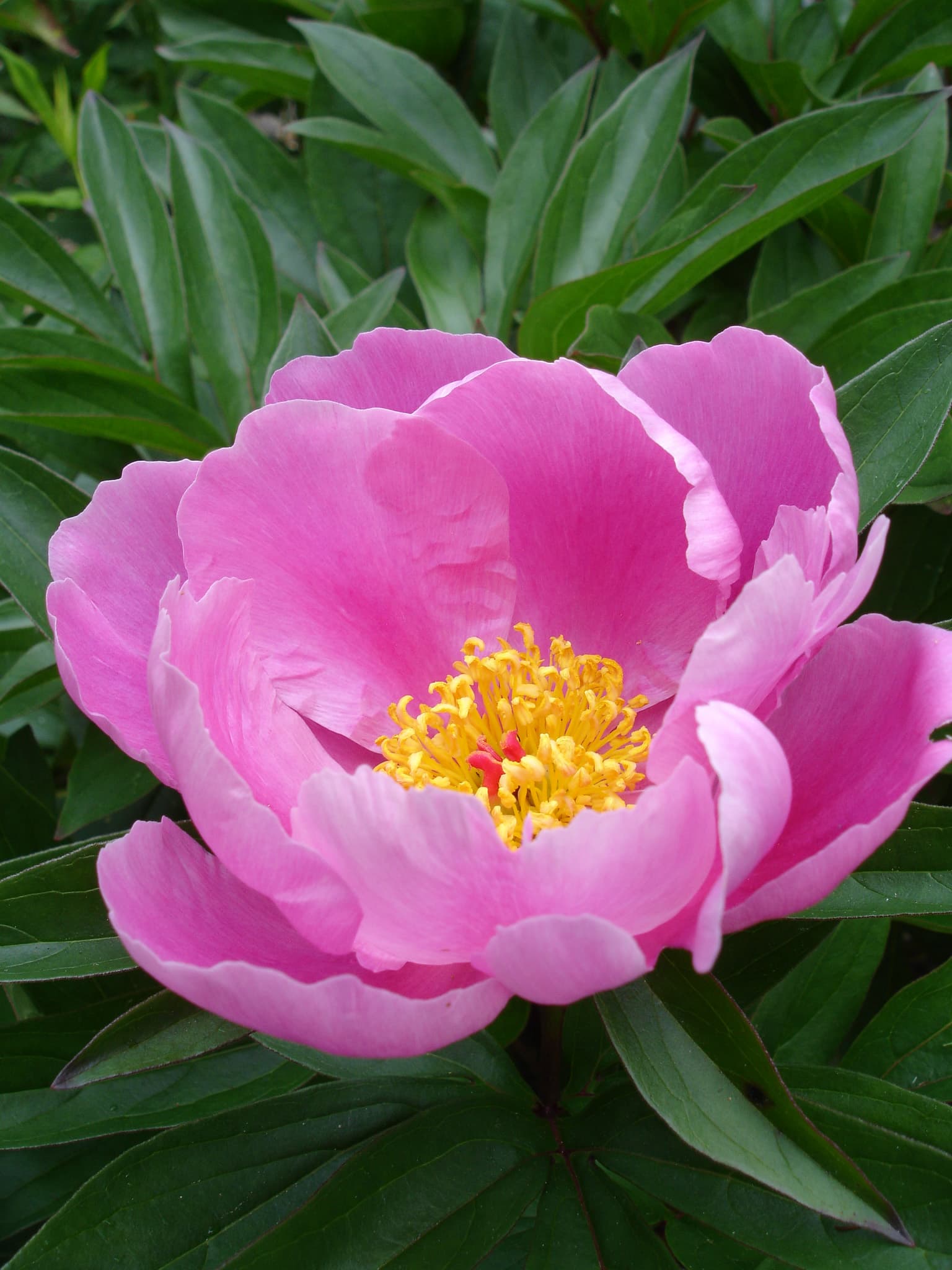
Chinese peony 'Sarah Bernhardt'
Paeonia lactiflora 'Sarah Bernhardt'
Dutch: Pioenroos 'Sarah Bernhardt'
Pioenroos 'Sarah Bernhardt' (Paeonia lactiflora 'Sarah Bernhardt') is a perennial from the Paeoniaceae family that grows up to 100cm tall. This plant thrives in full sun to partial shade and requires moderate maintenance. Blooms in late spring and early summer with pink flowers and attracts bees.
80–100 cm
70–90 cm
full sun, partial shade
moderate
loam, clay soil
moderate maintenance
late spring, early summer
pink
Ecologische waarde
Verzorgingskalender
| Taak | Jan | Feb | Mrt | Apr | Mei | Jun | Jul | Aug | Sep | Okt | Nov | Dec |
|---|---|---|---|---|---|---|---|---|---|---|---|---|
| 🌱Planten | ||||||||||||
| ✂️Snoeien | ||||||||||||
| 💧Bemesten |
Care tips
Planting
Paeonia lactiflora 'Sarah Bernhardt' thrives in full sun or partial shade, though flowering is most abundant with at least six hours of direct sunlight daily. Choose a sheltered spot where the plant can remain undisturbed for years—peonies resent being moved once established. The soil should be rich, moisture-retentive loam or clay that drains reasonably well; waterlogged conditions in winter will rot the crown. Prepare the planting area by digging a hole roughly 40 cm wide and 40 cm deep. Work in plenty of well-rotted manure or garden compost, mixing it thoroughly into the base and sides of the hole. If your soil is heavy clay, incorporate some horticultural grit to improve drainage. Plant bare-root peonies in September, October or November while the plant is dormant. This autumn planting window is critical: it allows the roots to establish before winter and ensures good flowering the following year. Position the crown so that the dormant buds (eyes) sit no more than 2–3 cm below the soil surface. Planting too deeply is the most common reason peonies fail to flower. Space plants 80 cm apart to allow for their mature spread of 70–90 cm. Backfill with the improved soil, firm gently with your hands, and water in thoroughly even if the ground is already damp. Apply a 5 cm layer of well-rotted compost or leaf mould around—but not over—the crown. Avoid further disturbance, and be patient: 'Sarah Bernhardt' may take two or three seasons to flower well as it settles in.
Pruning
Paeonia lactiflora 'Sarah Bernhardt' requires minimal pruning, but a proper autumn tidy-up is essential for plant health. In October or November, once the foliage has been blackened by the first hard frosts, cut all stems down to ground level. Use clean, sharp secateurs and remove every piece of top growth. This autumn cut-back serves two purposes: it prevents the overwintering of fungal diseases such as peony wilt (Botrytis paeoniae), and it tidies the border as the plant enters full dormancy. Do not be tempted to cut back earlier while the leaves are still green. The foliage continues to photosynthesise well into autumn, feeding the crown and building energy reserves for next year's flowers. Even yellowing or tatty leaves should be left until October. Gather up and dispose of all pruned material—do not compost it if you've seen any signs of disease during the growing season, as botrytis spores can survive. During the flowering period in late spring and early summer, deadhead spent blooms by cutting the stem just above the first set of strong leaves. This prevents the plant wasting energy on seed production and keeps the clump looking tidy, though it won't encourage a second flush. If the heavy, double pink flowers of 'Sarah Bernhardt' flop in rain, you may need to stake the plant in April before buds form; use grow-through supports or a ring of canes and string. Beyond this seasonal cut-back and deadheading, herbaceous peonies need no shaping or renovation pruning.
Maintenance
Water 'Sarah Bernhardt' regularly during dry spells in spring and early summer when the plant is growing rapidly and forming buds. Peonies have a moderate water need and prefer consistent moisture, but avoid waterlogging. Once flowering finishes, reduce watering unless the weather is exceptionally dry; established plants are fairly drought-tolerant by midsummer. In autumn and winter, natural rainfall is usually sufficient. Feed in March and April as new shoots emerge. Scatter a generous handful of blood, fish and bone or a balanced general-purpose granular fertiliser around the base of each plant, keeping it clear of the crown itself. A second, lighter feed immediately after flowering helps replenish the plant. In early spring, top up the mulch with a 3–5 cm layer of well-rotted compost or manure, again avoiding direct contact with the crown to prevent rot. Paeonia lactiflora is fully hardy to zone 3 and needs no winter protection in temperate Europe. The crown will sit dormant underground until spring. The main pest to watch for is peony wilt, a fungal disease that causes shoots to collapse and buds to brown and fail. Remove and bin affected stems immediately, cutting right back to ground level. Good autumn hygiene—removing all top growth in October or November—greatly reduces the risk. Ants are often seen on buds in spring; they're harmless, feeding on nectar, and need no control. Slugs occasionally damage emerging shoots in early spring, so scatter slug pellets or use barriers if this becomes a problem.
More about this plant
Combines well with
Related guides
Chinese peony 'Sarah Bernhardt' in your garden design?
Make a free garden design with AI advice. Our AI knows Chinese peony 'Sarah Bernhardt' and 130+ other plants.
Start free design