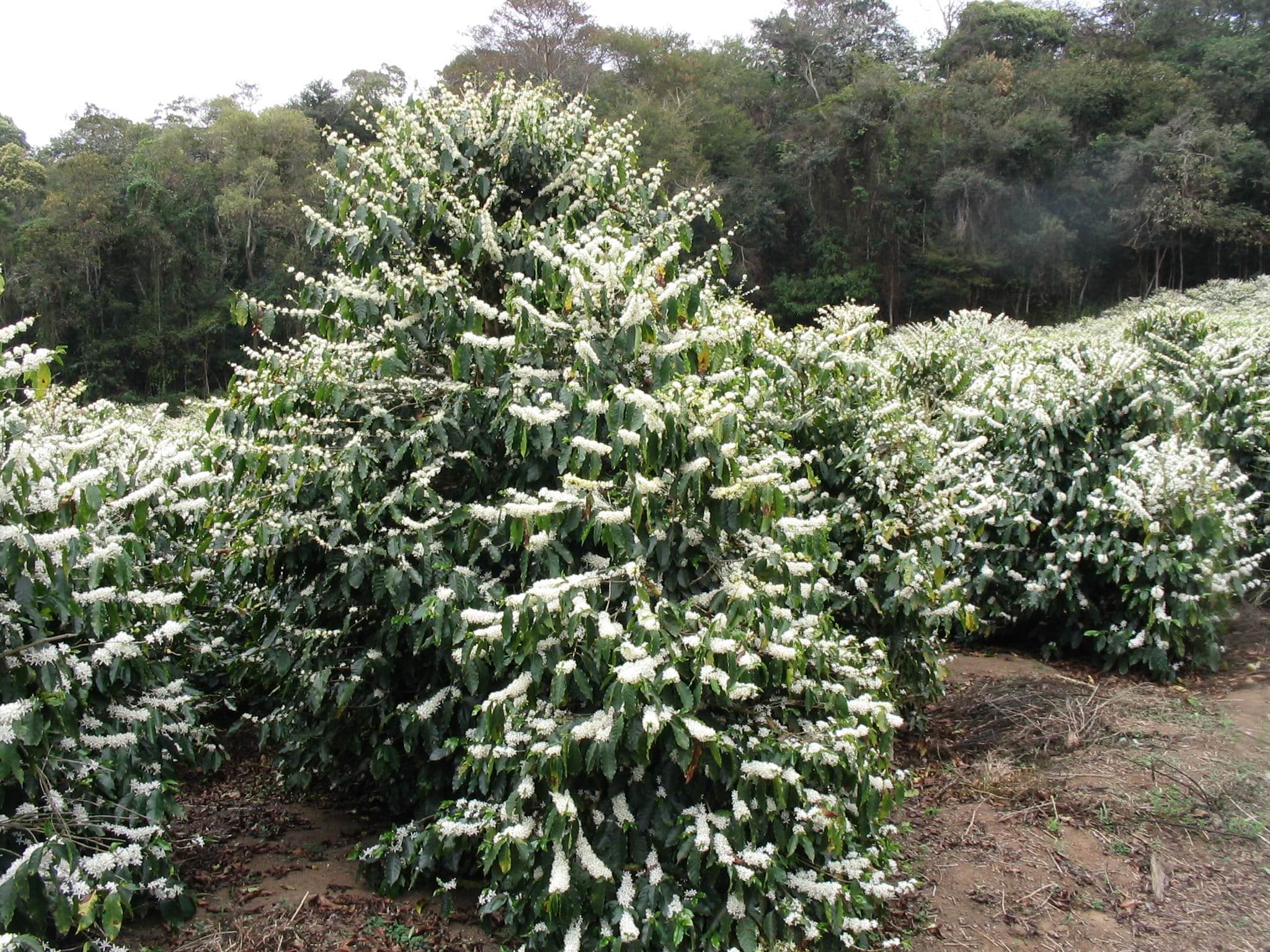
Coffee plant
Coffea arabica
Dutch: Koffieplant
Indoor plant
Coffee plant is a tropical houseplant. In the Dutch climate it isn't suited to growing outdoors — keep it indoors year-round in a warm, light spot.
Koffieplant (Coffea arabica) is a evergreen shrub from the Rubiaceae family that grows up to 200cm tall. This plant thrives in partial shade and requires moderate maintenance. Blooms in spring with white flowers.
40–200 cm
30–80 cm
partial shade
moderate
peat soil
moderate maintenance
spring
white
Care tips
Planting
Your coffee plant is a tropical houseplant that needs to live indoors year-round in temperate climates. Choose a pot with drainage holes at least 20–25 cm in diameter for a young plant, moving up to 30–40 cm as it matures. Coffee plants dislike waterlogged roots, so good drainage is essential. Use a peat-based potting mix or a blend formulated for acid-loving plants such as azaleas or camellias. Coffee prefers slightly acidic soil with a pH around 6–6.5. You can improve drainage by mixing in a little perlite or coarse sand if your compost feels heavy. Position your coffee plant in a bright spot with indirect light—near an east- or west-facing window is ideal. It tolerates partial shade but avoid deep gloom or the plant will become leggy and reluctant to flower. Keep it well away from harsh midday sun through south-facing glass, which can scorch the glossy leaves. Coffee plants also dislike draughts and sudden temperature changes, so avoid placing them near exterior doors, radiators, or air-conditioning vents. When potting, set the root ball at the same depth it sat in its nursery pot—don't bury the stem. Firm the compost gently around the roots and water thoroughly until excess drains away. Coffee plants appreciate warmth and humidity, so a consistent indoor temperature between 18–24°C suits them well. If your home is dry, especially in winter, stand the pot on a tray of moist pebbles or mist the foliage occasionally to raise humidity around the leaves. Repot every two to three years in spring, moving up one pot size when roots fill the container. Refresh the top few centimetres of compost annually if you prefer not to repot.
Pruning
Coffee plants grown indoors rarely require formal pruning, but a little tidying and shaping will keep your plant compact and attractive. The main tasks are removing spent flowers, yellowing or damaged leaves, and controlling height if the plant outgrows its space. Pinch out the growing tips of young plants in spring or early summer to encourage bushier, more branched growth. Use your fingers or clean, sharp secateurs to snip just above a leaf node. This prevents the plant becoming tall and spindly with foliage only at the top. If your coffee plant has flowered—small, fragrant white blooms appear in spring on mature specimens—remove the faded flowers once they brown. This keeps the plant looking tidy and, if pollination has occurred, you may see green berries (coffee cherries) developing. These take many months to ripen to red and are ornamental rather than a harvestable crop indoors, but they add interest. Throughout the year, check for any yellowing, brown-edged, or damaged leaves and cut them off at the base of the leaf stem. This is usually a sign of low humidity, inconsistent watering, or age—older lower leaves naturally yellow and drop. If your coffee plant becomes too tall or leggy, you can cut back the main stems by up to one-third in late winter or early spring, just before the growing season begins. Make cuts just above a leaf node or side shoot. The plant will usually respond by producing new growth lower down. Always use clean, sharp tools to avoid introducing disease, and wipe blades with diluted disinfectant between cuts if you're removing diseased material.
Maintenance
Water your coffee plant when the top 2–3 cm of compost feels dry to the touch. During the growing season from spring through summer, this usually means watering once or twice a week. Pour water until it runs from the drainage holes, then empty the saucer so the roots don't sit in standing water. In autumn and winter, reduce watering frequency as growth slows—once a week or less is often enough. Coffee plants dislike both drought and soggy soil, so consistent moisture without waterlogging is key. Feed every two to four weeks from April through September with a balanced liquid houseplant fertiliser diluted to half the recommended strength, or use a feed formulated for acid-loving plants. Stop feeding in autumn and winter when growth pauses. Coffee plants thrive in humidity above 50 per cent. If leaf tips turn brown or edges curl, the air is too dry. Mist the foliage regularly, group plants together, or use a humidifier. Wipe the glossy leaves occasionally with a damp cloth to remove dust and help the plant photosynthesise efficiently. Keep your coffee plant in a warm room with temperatures between 18–24°C year-round. It will tolerate brief dips to around 15°C but suffers below that. Avoid cold draughts and sudden temperature swings. Watch for common houseplant pests such as spider mite, scale, and mealybug, especially in dry indoor air. Spider mites cause fine webbing and stippled leaves; treat by raising humidity and wiping foliage with soapy water or using an appropriate houseplant insecticide. Scale and mealybug appear as small brown bumps or white cottony clusters; remove by hand or with a cotton bud dipped in diluted methylated spirit. Root rot can occur if the plant is overwatered—ensure good drainage and never let the pot stand in water.
Buy this plant
Koffieplant (Coffea arabica) — glanzende kamerplant
Browse the range at PlantcentraalPlantcentraal is our own webshop.