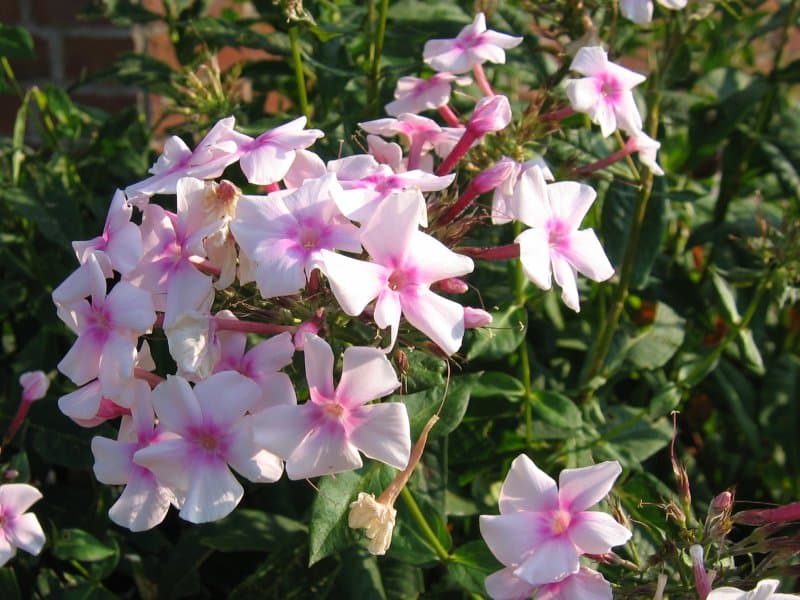
Garden phlox 'David'
Phlox paniculata 'David'
Dutch: Vlambloem 'David'
Vlambloem 'David' (Phlox paniculata 'David') is a perennial from the Polemoniaceae family that grows up to 120cm tall. This plant thrives in full sun to partial shade and requires moderate maintenance. Blooms in summer and late summer with white flowers and attracts bees and butterflies.
80–120 cm
50–70 cm
full sun, partial shade
moderate
loam, clay soil
moderate maintenance
summer, late summer
white
Ecologische waarde
Verzorgingskalender
| Taak | Jan | Feb | Mrt | Apr | Mei | Jun | Jul | Aug | Sep | Okt | Nov | Dec |
|---|---|---|---|---|---|---|---|---|---|---|---|---|
| 🌱Planten | ||||||||||||
| ✂️Snoeien | ||||||||||||
| 💧Bemesten |
Care tips
Planting
Phlox paniculata 'David' thrives in full sun or partial shade, though flowering is strongest with at least six hours of direct sunlight daily. Choose a spot with good air circulation to reduce the risk of powdery mildew, a common issue with border phlox. The soil should be moisture-retentive but well-drained; loam and clay soils are ideal, provided they don't become waterlogged in winter. Prepare the planting area by digging in plenty of well-rotted compost or manure to improve fertility and moisture retention. If your soil is heavy clay, work in some horticultural grit to improve drainage. Plant in March, April or May for establishment before summer, or in September and October when the soil is still warm and autumn rains help roots settle in. Dig a hole slightly larger than the root ball and plant so the crown sits level with the surrounding soil surface—avoid burying it too deeply. Space plants 50 cm apart to allow for their mature spread of 50–70 cm and to ensure good airflow between clumps. If planting multiple specimens, stagger them slightly rather than in rigid rows for a more natural effect. Water thoroughly after planting to settle the soil around the roots and eliminate air pockets. Apply a 5 cm layer of organic mulch such as garden compost or well-rotted manure around the base, keeping it clear of the stems to prevent rot. In exposed sites or if your soil is particularly rich, consider placing a support hoop or canes around young plants in spring; 'David' can reach 80–120 cm and heavy flower heads may flop after rain.
Pruning
Phlox paniculata 'David' benefits from two main pruning interventions each year. In March, as new growth begins to emerge, cut back all the previous year's stems to ground level or just above the fresh basal shoots. Use clean, sharp secateurs and remove the old brown stems completely—they serve no purpose and can harbour pests and disease spores over winter. This spring cut-back encourages strong, healthy new growth and helps maintain a tidy clump. During the growing season, deadhead spent flower trusses regularly by cutting back to the next set of leaves or side buds. This encourages a second, smaller flush of blooms in late summer and prevents the plant wasting energy on seed production. Simply snip off the faded flower head where it meets the stem; you'll often find smaller side shoots ready to develop. In November, after flowering has completely finished and the foliage begins to die back, you can cut the stems down to around 10–15 cm above ground level. Some gardeners prefer to leave this task until March, and there's merit in both approaches: autumn cutting tidies the border and removes potential overwintering sites for phlox eelworm and mildew spores, while leaving stems standing provides some winter structure and a little protection for the crown during hard frosts. If your clump becomes congested or flowering diminishes after three or four years, lift and divide it in March or April. Discard the woody central portion and replant vigorous outer sections, spacing them as you would new plants. This rejuvenates the clump and is an excellent opportunity to improve the soil with fresh compost.
Maintenance
Water phlox paniculata 'David' regularly during dry spells, especially from late spring through summer when it's in active growth and flower. The moderate water requirement means the soil should stay consistently moist but never sodden; aim for a deep soak once or twice a week rather than frequent shallow watering. Mulching helps retain moisture and keeps roots cool. Reduce watering in autumn as growth slows, and avoid overhead watering if possible—wet foliage encourages powdery mildew, the most common problem with border phlox. Feed in April with a general-purpose granular fertiliser such as blood, fish and bone, scattering a handful around the base of each clump and lightly forking it in. Apply a second feed in May as flower buds form, and a final application in June to sustain the long flowering period through summer and late summer. Avoid high-nitrogen feeds after June, as soft late growth is more vulnerable to winter damage. Powdery mildew often appears as a white coating on leaves in late summer, particularly in dry conditions or where air circulation is poor. 'David' is notably more resistant than many phlox cultivars, but if mildew does develop, remove affected leaves and ensure plants aren't overcrowded. Phlox eelworm can cause distorted leaves and stunted growth; if you spot symptoms, lift and destroy affected plants—do not compost them—and avoid replanting phlox in that spot for several years. This perennial is fully hardy in zones 4–8 and requires no winter protection in temperate Europe. Refresh the mulch layer each spring after cutting back, and divide congested clumps every three to four years to maintain vigour and flowering performance.
More about this plant
Combines well with
Related guides
Garden phlox 'David' in your garden design?
Make a free garden design with AI advice. Our AI knows Garden phlox 'David' and 130+ other plants.
Start free design