Pruning Lemon balm
When and how — Melissa officinalis
Prune your lemon balm in June and August — the optimal month is usually August.
The next pruning window is June next year.
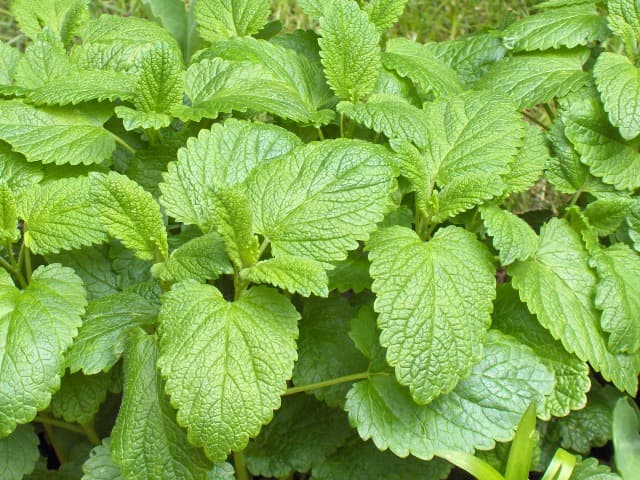
When to prune?
The herb lemon balm is pruned in June and August.
You prune herbs by harvesting them regularly.
With herbs, pruning is the same as harvesting. The more often you pick the tips, the fuller the plant — especially with basil, mint and oregano, weekly tip-pinching produces a far denser bush. Woody herbs (rosemary, sage, thyme, lavender) also get one proper annual prune: cut back by a third to half immediately after flowering, but NEVER into old, bare wood — they won't re-shoot from there. Annual herbs (basil, coriander, dill) need no winter prune; you harvest until the first frost. Hardy perennial herbs (parsley, chives, oregano) get a light cut-back in November and a full clearance in February before new growth.
How to prune lemon balm
Lemon balm benefits from regular pruning to keep it productive, compact, and prevent it from becoming straggly or self-seeding prolifically around the garden. The main pruning periods are June and August, which coincide with the plant's vigorous growth and flowering phases during summer. In June, once the plant has put on substantial leafy growth, cut it back by about half to two-thirds of its height using clean, sharp secateurs or garden shears. This encourages a fresh flush of tender, flavourful leaves and delays flowering if you want to prioritise foliage production over blooms. If you allow lemon balm to flower—which is beneficial for pollinators—deadhead the spent flower spikes promptly to prevent prolific self-seeding. The small white flowers are attractive but the plant can become invasive if allowed to set seed freely. Prune again in August after the main flowering period. Cut the whole plant back hard to about 10–15 cm above ground level. This rejuvenates the plant, promotes bushy regrowth, and provides a final harvest of fresh leaves before autumn. The new growth will be more compact and less prone to mildew, which can affect older, congested foliage in damp conditions. Use sharp tools to make clean cuts and avoid tearing the stems. You don't need specialist equipment—kitchen scissors or secateurs work perfectly well. If your lemon balm looks tired or diseased at any point during the growing season, don't hesitate to cut it back hard; it recovers quickly and will reward you with healthy new growth within a few weeks.
Common mistakes
✗ Cutting lavender into old wood
Lavender doesn't re-shoot from old, bare wood. Cut back 5–10 cm into young green growth every year — neglect it for a few seasons and you'll have to replace the plant.
✗ Picking basil leaf by leaf
Don't pull leaves off the stem — cut the entire top with 2–3 leaf pairs. The plant then sends out two new shoots and bushes up.
✗ Letting culinary herbs flower 'for the bees'
A noble goal, but flowering changes the leaf flavour (often bitterer). Compromise: let part of the plant flower and cut the rest back in time.
Too late this year? Here's what to do
Better to wait than prune at the wrong moment. The next optimal window is June next year. Until then: leave the plant alone — only remove dead or diseased wood (which you can do year-round).


