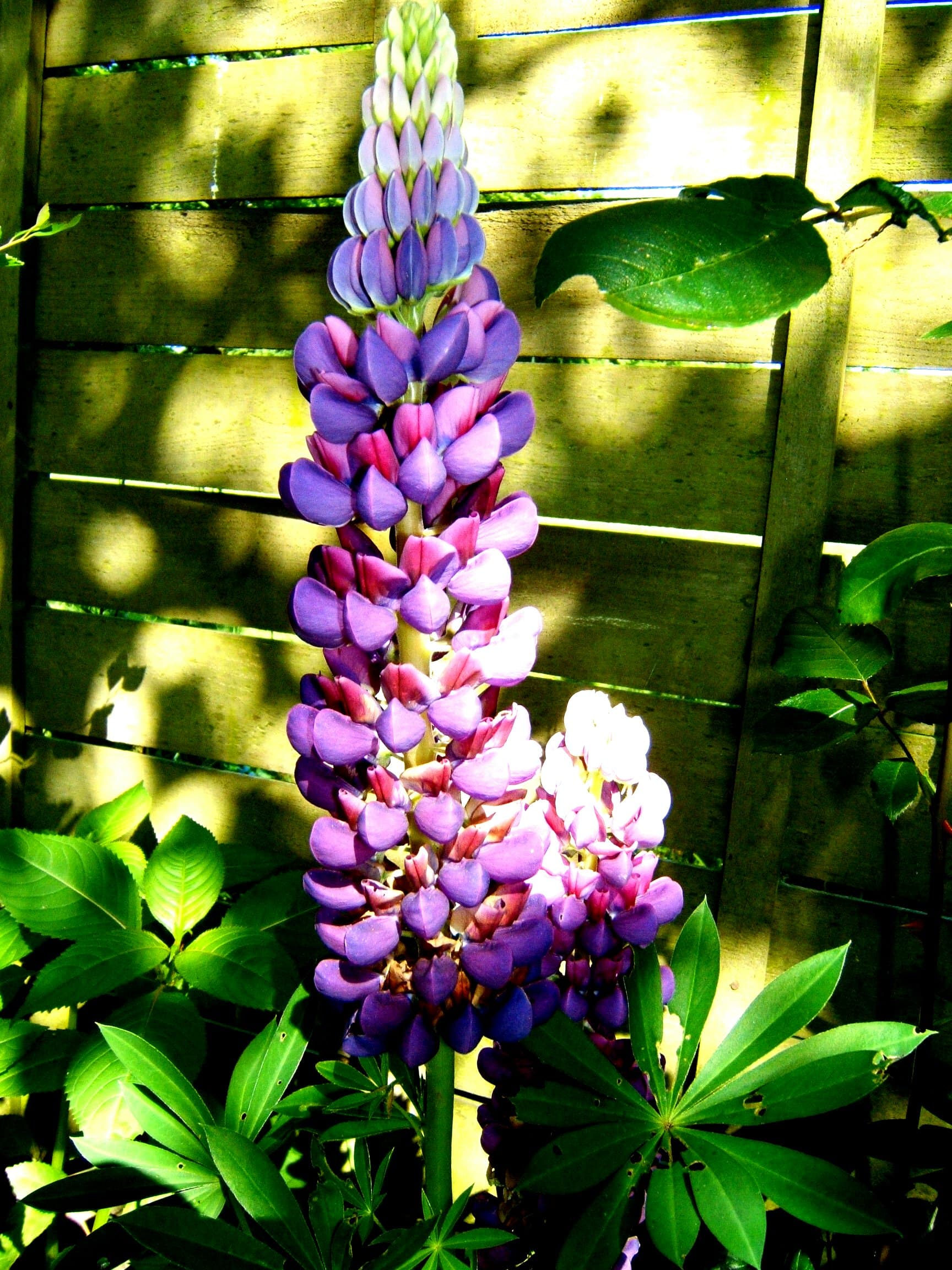
Lupin
Lupinus polyphyllus
Dutch: Lupine
Lupine (Lupinus polyphyllus) is a perennial from the Fabaceae family that grows up to 120cm tall. This plant thrives in full sun to partial shade and requires moderate maintenance. Blooms in late spring and early summer and summer with white, yellow, orange, pink, red, purple, blue flowers and attracts bees and butterflies.
80–120 cm
40–60 cm
full sun, partial shade
moderate
sandy soil, loam
moderate maintenance
late spring, early summer, summer
white, yellow, orange, pink, red, purple, blue
Ecologische waarde
Verzorgingskalender
| Taak | Jan | Feb | Mrt | Apr | Mei | Jun | Jul | Aug | Sep | Okt | Nov | Dec |
|---|---|---|---|---|---|---|---|---|---|---|---|---|
| 🌱Planten | ||||||||||||
| ✂️Snoeien | ||||||||||||
| 💧Bemesten |
Care tips
Planting
Lupins thrive in full sun or partial shade, though flowering is strongest with at least six hours of direct sunlight daily. They prefer sandy soil or loam with good drainage and slightly acidic to neutral pH; avoid heavy clay or waterlogged ground, as lupins are prone to root rot in poorly drained conditions. Before planting, dig over the soil to a spade's depth and incorporate some well-rotted compost or leaf mould to improve structure, but don't add lime or manure, which can inhibit the nitrogen-fixing bacteria in their roots. Plant lupins in March, April, September or October. If planting container-grown specimens, dig a hole slightly larger than the root ball, set the plant at the same depth it was growing in the pot, and backfill with soil, firming gently. Space plants 45 cm apart to allow for their mature spread of 40–60 cm. If sowing seed directly outdoors, sow in March or April after the last hard frost, or in September for germination the following spring. Scarify the hard seed coat with sandpaper or nick it with a knife to improve germination, then sow 1–2 cm deep. Water thoroughly after planting to settle the soil around the roots. Apply a 5 cm layer of mulch around the base, keeping it clear of the crown to prevent rot. Young plants may need staking in exposed sites, as the tall flower spikes—reaching 80–120 cm—can be top-heavy. Lupins establish a deep taproot, so avoid transplanting once settled.
Pruning
Prune lupins in July and August, immediately after the main flush of flowers fades. The primary task is deadheading: cut the spent flower spikes back to a side shoot or to just above the basal foliage using secateurs or a sharp knife. This prevents the plant from putting energy into seed production and often encourages a second, smaller flush of blooms later in summer or early autumn. If you want to collect seed for sowing, leave one or two spikes to mature; the pods will turn brown and split when ripe, usually by late August. In addition to deadheading, remove any yellowing or damaged leaves throughout the growing season to keep the plant tidy and reduce the risk of fungal disease, which lupins can be susceptible to in damp conditions. Cut these leaves back to the base of the stem. After flowering has completely finished in late summer, you can cut back the entire plant to ground level if the foliage looks tatty, though many gardeners prefer to leave the basal rosette of leaves intact over winter for a tidier appearance and some frost protection for the crown. Lupins are short-lived perennials, typically lasting three to five years. If clumps become congested or flowering declines, it's better to replace them with fresh plants rather than attempt rejuvenation pruning, as lupins don't respond well to hard cutting back of old woody growth. Always clean your tools between plants to avoid spreading disease.
Maintenance
Water lupins regularly during their first growing season to help establish the deep taproot, especially in dry spells. Once established, they have moderate water needs; water deeply during prolonged dry periods in spring and summer, particularly when buds are forming and during flowering. Reduce watering in autumn and winter, as lupins are dormant and excess moisture around the crown can cause rot. Feed in March and April as new growth emerges. Apply a balanced general-purpose fertiliser such as blood, fish and bone or a slow-release granular feed, scattering it around the base of the plant and watering in. Avoid high-nitrogen fertilisers, as lupins fix their own nitrogen through root nodules and too much can promote leafy growth at the expense of flowers. A light top-dressing of compost in early spring is also beneficial. Lupins are fully hardy in zones 4–8 and need no special winter protection in temperate Europe. Mulch around the base in autumn with compost or bark to suppress weeds and retain moisture, but keep mulch away from the crown. Common problems include aphids, which cluster on young shoots and flower spikes in spring—hose them off or use an insecticidal soap. Lupin anthracnose, a fungal disease causing brown spots on leaves and stems, can be serious; remove and destroy affected foliage promptly and avoid overhead watering. Powdery mildew may appear in dry summers; improve air circulation and water at the base. Slugs and snails target young foliage in spring, so use barriers or organic pellets if necessary.
More about this plant
Combines well with
Related guides
Lupin in your garden design?
Make a free garden design with AI advice. Our AI knows Lupin and 130+ other plants.
Start free design