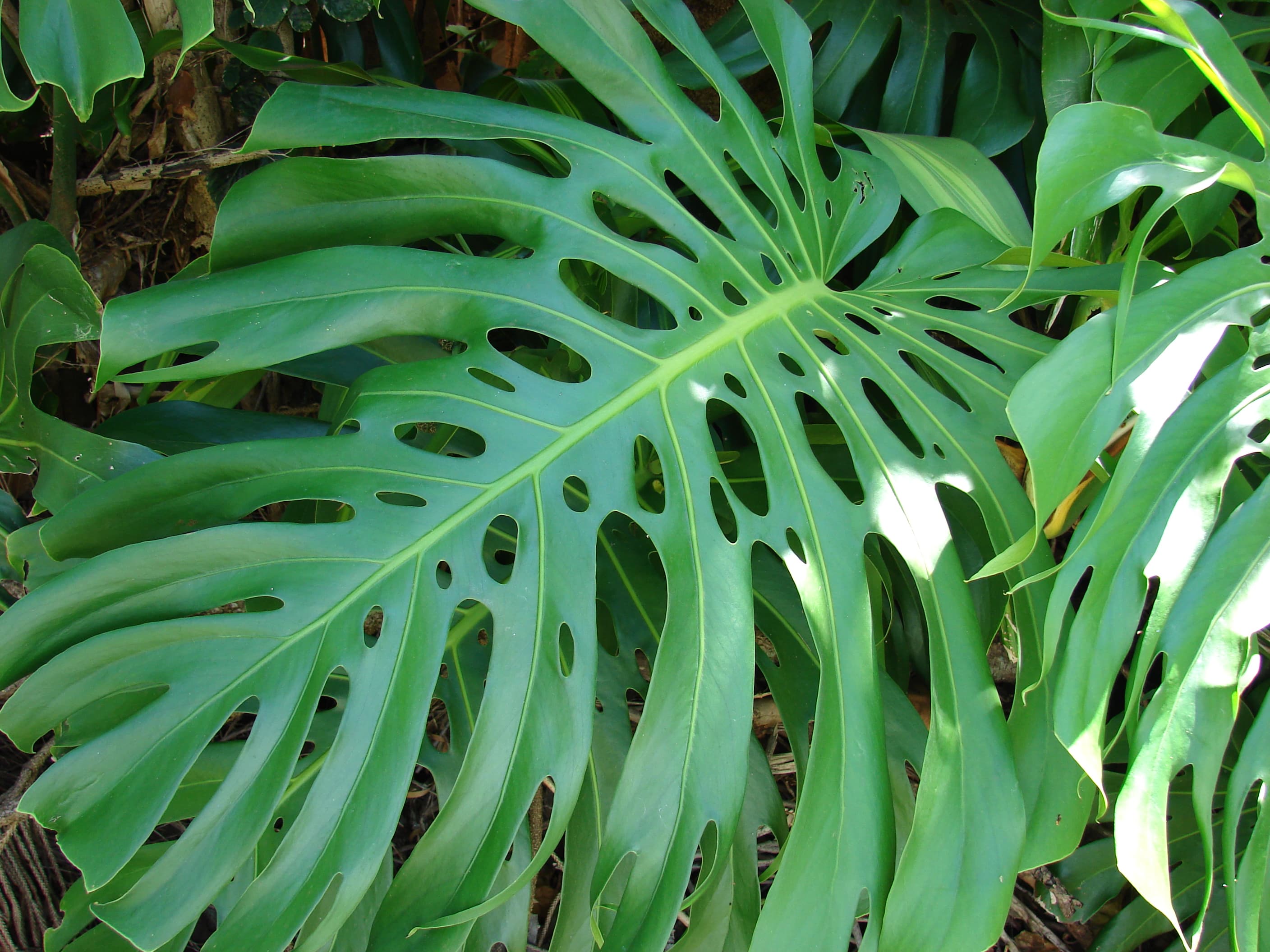
Monstera
Monstera deliciosa
Indoor plant
Monstera is a tropical houseplant. In the Dutch climate it isn't suited to growing outdoors — keep it indoors year-round in a warm, light spot.
Monstera (Monstera deliciosa) is a evergreen climber from the Araceae family that grows up to 300cm tall. This plant thrives in partial shade and requires low maintenance.
100–300 cm
80–200 cm
partial shade
moderate
peat soil
low maintenance
Care tips
Planting
Monstera deliciosa thrives indoors in bright, indirect light. Place your plant near an east- or west-facing window where it will receive plenty of ambient light without harsh midday sun, which can scorch the distinctive split leaves. A north-facing window works too, though growth will be slower. Avoid deep shade; insufficient light results in smaller leaves with fewer fenestrations (the characteristic holes and splits). Choose a pot with drainage holes at least 25–30 cm in diameter for a young plant, moving up to 40 cm or larger as it matures. Use a peat-based potting mix that retains some moisture but drains freely—a standard houseplant compost mixed with perlite or orchid bark (roughly two parts compost to one part drainage material) works well. The soil should feel rich and slightly spongy, mimicking the forest floor of its tropical origins. Plant your monstera so the root ball sits at the same depth it was growing in its nursery pot. Firm the compost gently around the roots and water thoroughly until water runs from the drainage holes, then allow the excess to drain away completely. Never leave the pot standing in water. Because monstera is a natural climber, provide support from the outset. A moss pole or coir pole inserted into the pot gives the aerial roots something to grip and encourages larger, more mature foliage. Tie the main stem loosely to the pole with soft twine. Repot every two to three years in spring when roots fill the pot, moving up one pot size. Monstera tolerates being slightly pot-bound but grows more vigorously with fresh compost and room to expand.
Pruning
Monstera deliciosa requires very little pruning in the traditional sense. It does not need regular cutting back to maintain health or shape, and heavy pruning can spoil its natural climbing habit. However, some light maintenance keeps the plant tidy and under control, especially as it matures and reaches the upper limits of your indoor space. Remove any yellowing or damaged leaves as soon as you notice them. Use clean, sharp secateurs or scissors and cut the leaf stem (petiole) back to the main stem, as close to the base as possible without damaging the trunk. Yellowing leaves are a natural part of the plant's life cycle, particularly lower, older foliage, and removing them redirects energy into new growth. If your monstera becomes too tall or leggy, you can prune the main stem in spring or early summer when the plant is actively growing. Cut just above a node (the point where a leaf joins the stem or where an aerial root emerges). This encourages branching lower down, though monstera typically produces only one or two new shoots rather than bushy regrowth. The cut stem can be propagated in water or moist compost if it includes at least one node and aerial root. Train aerial roots towards the moss pole rather than cutting them off—they help anchor the plant and take up moisture. If a root becomes unruly or damaged, trim it back by half rather than removing it entirely. Wipe dust from the large leaves every few weeks with a damp cloth to keep the pores clear and the foliage glossy. This isn't pruning, but it's the most important regular task for a healthy monstera.
Maintenance
Water your monstera when the top 3–5 cm of compost feels dry to the touch. In spring and summer, during active growth, this usually means watering once a week; in autumn and winter, every ten to fourteen days is often enough. Pour water evenly over the surface until it drains from the bottom, then empty the saucer. Overwatering is the most common problem—monstera tolerates short dry spells far better than soggy roots, which quickly lead to root rot. Brown, crispy leaf edges suggest underwatering or low humidity; yellowing leaves and a musty smell indicate overwatering. Feed every four to six weeks from April through September with a balanced liquid houseplant fertiliser diluted to half the recommended strength. Monstera is not a heavy feeder, and too much fertiliser causes salt build-up and brown leaf tips. No feeding is needed in winter when growth slows. Monstera prefers moderate to high humidity (50–60 per cent or above). In centrally heated homes, especially in winter, mist the leaves occasionally or stand the pot on a tray of pebbles and water (ensuring the base doesn't sit in water). Grouping houseplants together also raises local humidity. Keep your monstera in a warm room with temperatures between 18–27 °C year-round. Avoid cold draughts, radiators, and sudden temperature swings. Wipe the leaves monthly to remove dust and check for pests. Spider mites (fine webbing, stippled leaves) and scale insects (brown bumps on stems) occasionally appear in dry conditions; treat with insecticidal soap or wipe off by hand. Root rot from overwatering is the main disease risk—ensure good drainage and never let the pot sit in standing water.
Buy this plant
Monstera (gatenplant) — iconische kamerplant
Browse the range at PlantcentraalPlantcentraal is our own webshop.