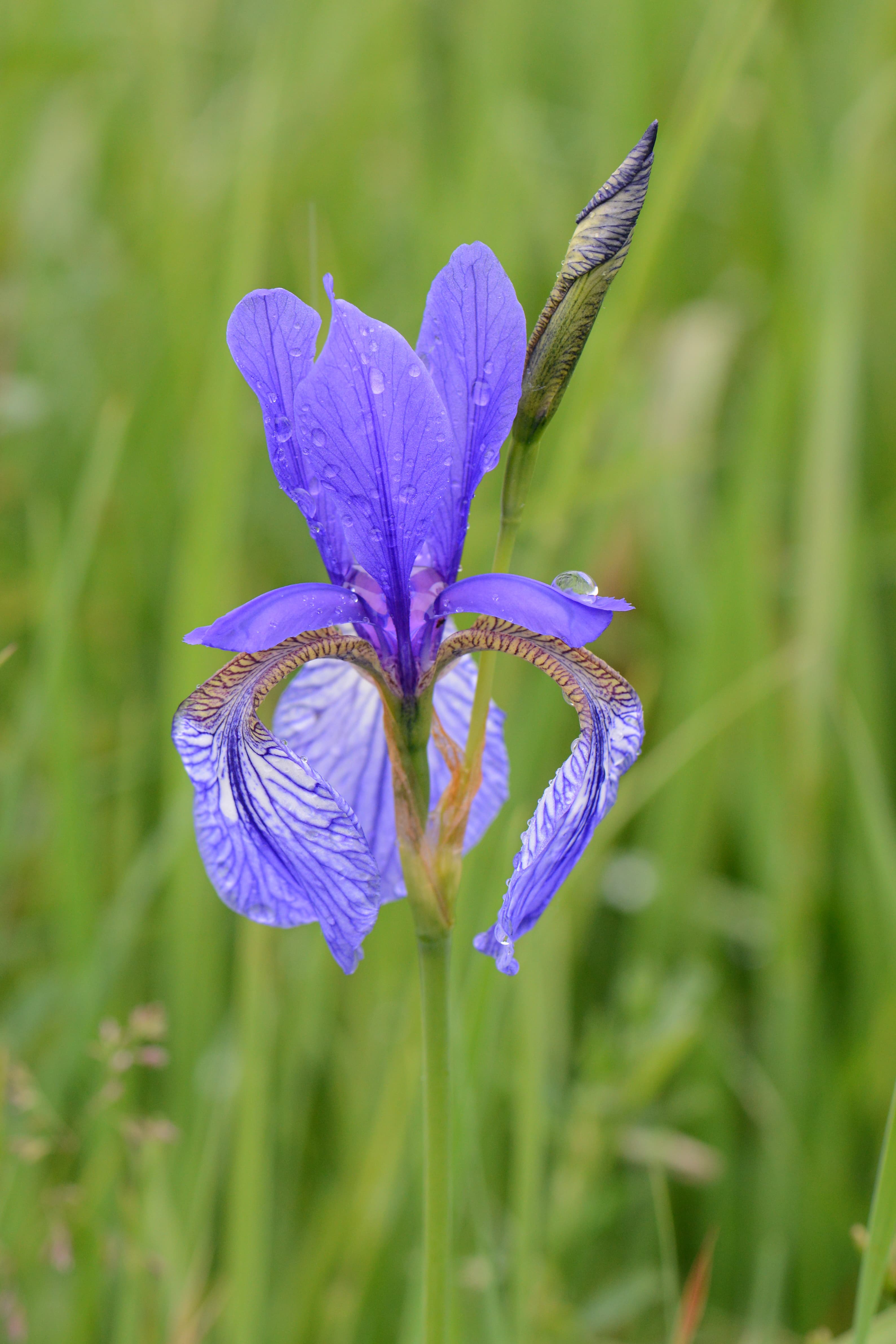
When to plant Siberian iris?
Best month and method — Iris sibirica
Plant your siberian iris in March, April, September and October — the optimal month is usually September.
You're in the planting season right now — a good moment to start.
Spacing
40 cm
≈ 6 plants
For an X m² border, calculate: X × 6 plants.
Step by step: plant siberian iris
Siberian iris thrives in full sun or partial shade and prefers moisture-retentive soil, making it ideal for heavier loam or clay soils that hold water well. Unlike bearded iris, it tolerates and even enjoys damp conditions, so it's an excellent choice for pond margins, bog gardens, or any spot that stays reliably moist. Plant rhizomes in March, April, September, or October when the soil is workable and temperatures are moderate. Autumn planting allows roots to establish before winter, while spring planting gives a full growing season ahead. Prepare the site by digging in plenty of organic matter—well-rotted compost or manure—to improve soil structure and moisture retention, especially if your soil is on the lighter side. Dig a shallow planting hole and position the rhizome horizontally just below the surface, no more than 2–3 cm deep; planting too deep can inhibit flowering. Space plants 40 cm apart to allow for their eventual spread of 30–45 cm and ensure good air circulation. After planting, firm the soil gently around the rhizome and water thoroughly to settle it in and eliminate air pockets. Keep the soil consistently moist for the first few weeks while roots establish—this is critical for Siberian iris. Apply a 5 cm layer of organic mulch such as composted bark or leaf mould around (but not directly over) the rhizomes to retain moisture and suppress weeds. Unlike bearded iris, Siberian iris does not need the rhizome exposed to sun, so mulching is beneficial. No staking is required; the upright foliage and sturdy stems are self-supporting even at their full height of 60–100 cm.


