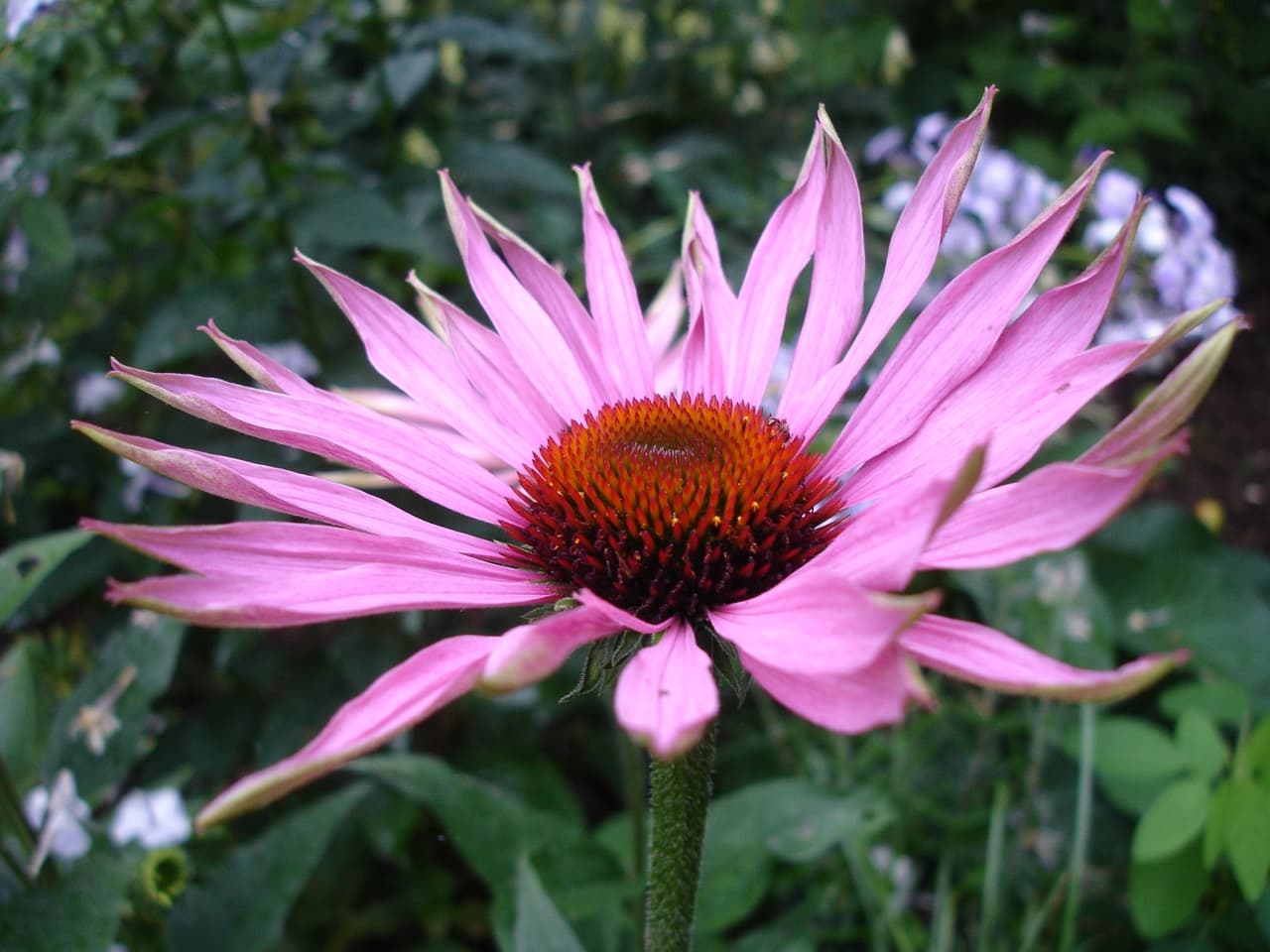
Yellow Coneflower
Echinacea 'Sunrise'
Dutch: Geel zonnehoedje
Geel zonnehoedje (Echinacea 'Sunrise') is a perennial from the Asteraceae family that grows up to 90cm tall. This plant thrives in full sun to partial shade and requires moderate maintenance. Blooms in summer and autumn with yellow flowers and attracts bees and butterflies.
60–90 cm
30–50 cm
full sun, partial shade
moderate
sandy soil, loam
moderate maintenance
summer, autumn
yellow
Ecologische waarde
Verzorgingskalender
| Taak | Jan | Feb | Mrt | Apr | Mei | Jun | Jul | Aug | Sep | Okt | Nov | Dec |
|---|---|---|---|---|---|---|---|---|---|---|---|---|
| 🌱Planten | ||||||||||||
| 💧Bemesten |
Care tips
Planting
Yellow coneflower 'Sunrise' thrives in full sun but tolerates partial shade, though flowering may be less prolific in shadier spots. Choose a site with good drainage—this Echinacea cultivar performs best in sandy soil or loam and dislikes heavy, waterlogged ground. If your soil is clay-heavy, dig in plenty of grit and compost before planting to improve structure and drainage. Plant container-grown specimens from April through June, once the risk of hard frost has passed and the soil has begun to warm. Dig a hole roughly twice the width of the root ball and about the same depth. Loosen the roots gently if they're circling the pot, then position the plant so the crown sits level with the surrounding soil—planting too deep can encourage rot. Backfill with the excavated soil mixed with a little well-rotted compost or leaf mould, firm gently, and water in thoroughly. Space plants 40 cm apart to allow for their mature spread of 30–50 cm and to ensure good air circulation, which helps prevent mildew. If you're planting several in a border, stagger them in drifts rather than rigid rows for a more natural effect. Immediately after planting, water well to settle the soil around the roots, then apply a 5 cm layer of mulch—bark chips or garden compost work well—keeping it clear of the crown itself. This conserves moisture and suppresses weeds while the plant establishes. Water regularly during the first growing season, especially in dry spells, to help the root system develop. Yellow coneflower is moderately drought-tolerant once established, but consistent moisture in the first few months is essential for strong growth.
Pruning
Echinacea 'Sunrise' does not require formal pruning in the traditional sense, and no specific pruning months are recorded for this cultivar. However, regular deadheading and end-of-season tidying will keep the plant looking its best and can influence flowering and winter interest. During the flowering period—from summer into autumn—remove spent blooms by cutting the stem back to the first set of healthy leaves or to a side bud lower down. This encourages the plant to produce more flowers rather than setting seed, prolonging the display. Use clean secateurs or snips for a tidy cut. If you prefer a more relaxed approach, you can leave some seedheads in place from late summer onwards; they provide food for finches and other seed-eating birds and add attractive structure to the winter garden, especially when rimmed with frost. In late autumn or early spring, cut back all the old stems to ground level. Many gardeners prefer to leave the stems standing over winter for wildlife value and then tidy up in February or March before new growth emerges. Cut just above the crown, taking care not to damage the emerging shoots in spring. Remove any dead or damaged foliage at the same time. Every three to four years, consider lifting and dividing congested clumps in early spring. This rejuvenates the plant, improves flowering, and gives you new plants for elsewhere in the garden. Dig up the clump, tease or cut it into sections with healthy roots and shoots, and replant immediately at the same depth, discarding any woody or unproductive portions from the centre.
Maintenance
Yellow coneflower 'Sunrise' has moderate water needs. Water regularly during prolonged dry spells in spring and summer, aiming to keep the soil evenly moist but never waterlogged. Established plants tolerate short periods of drought, but flowering and vigour suffer if the soil dries out completely. In autumn and winter, natural rainfall is usually sufficient; avoid overwatering during dormancy, as this can lead to crown rot. Feed in March and April to support strong growth and abundant flowering. Apply a balanced granular fertiliser such as blood, fish and bone or a general-purpose feed (e.g. Growmore) around the base of the plant, following packet instructions. Alternatively, top-dress with a 3–5 cm layer of well-rotted compost or manure in early spring, which feeds the soil and improves structure. Avoid high-nitrogen feeds later in the season, as these promote leafy growth at the expense of flowers. This Echinacea is fully hardy across zones 4a–9b and requires no special winter protection in temperate Europe. The crown is dormant below ground from late autumn to early spring. Mulch lightly around (but not over) the crown in autumn to insulate roots in colder gardens, though this is rarely necessary in milder areas. Watch for powdery mildew, particularly in dry summers or where air circulation is poor—it appears as white, dusty patches on leaves. Improve spacing, water at the base rather than overhead, and remove affected foliage promptly. Aphids occasionally cluster on new growth; a strong jet of water or an insecticidal soap usually resolves the problem. Slugs may nibble emerging shoots in spring; use organic pellets, barriers, or hand-picking to protect young growth.
More about this plant
Combines well with
Related guides
Yellow Coneflower in your garden design?
Make a free garden design with AI advice. Our AI knows Yellow Coneflower and 130+ other plants.
Start free design