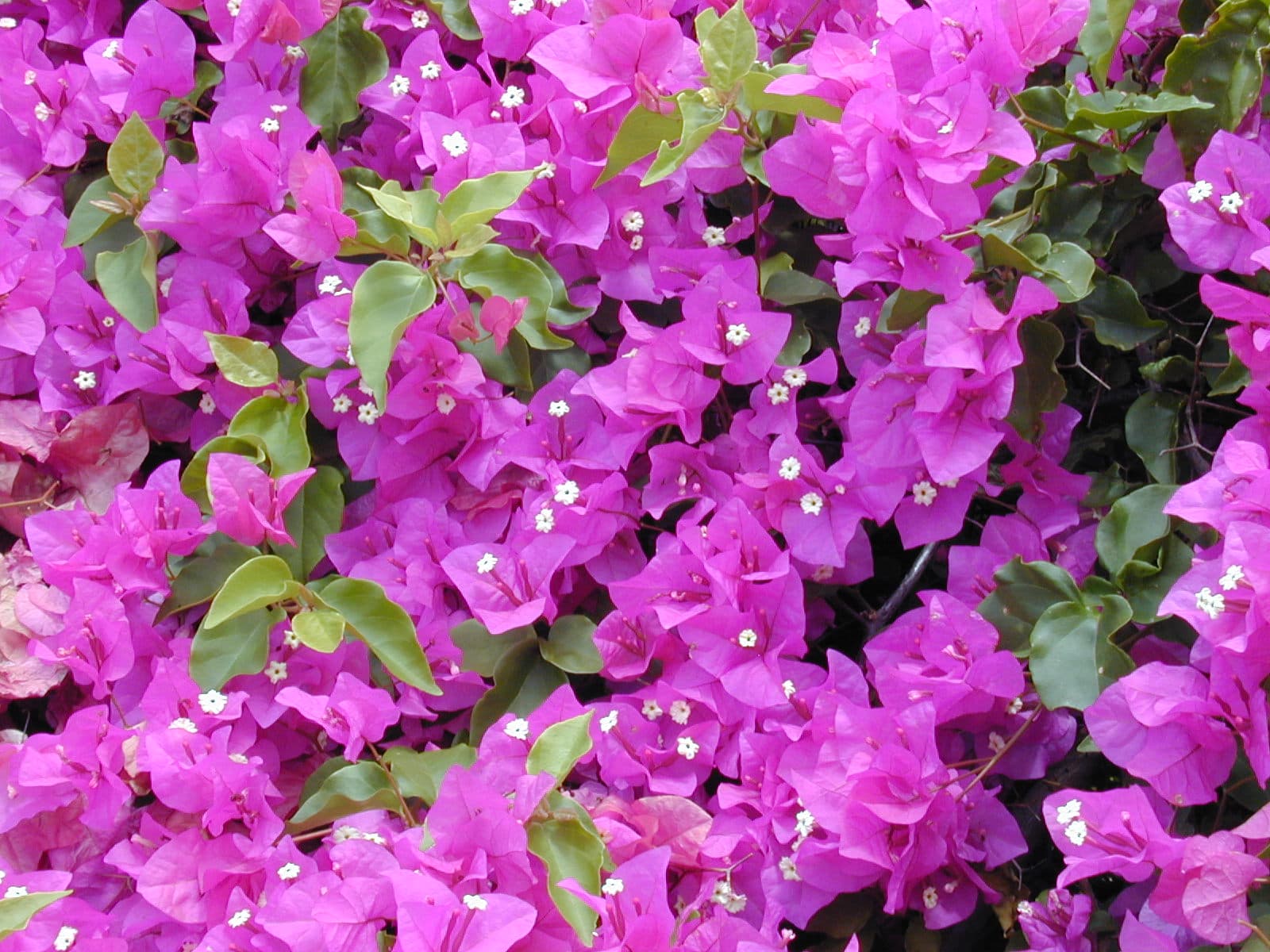
Bougainvillea
Bougainvillea glabra
Not winter-hardy
Bougainvillea doesn't survive Dutch winters outdoors. Grow it as a patio/container plant: outside in summer, then overwinter frost-free (indoors or a cool, light space). It also does well as a houseplant.
Bougainvillea (Bougainvillea glabra) is a climber from the Nyctaginaceae family that grows up to 400cm tall. This plant thrives in full sun and requires moderate maintenance. Blooms in summer and late summer with pink, purple, orange, white flowers and attracts bees and butterflies.
100–400 cm
100–300 cm
full sun
moderate
loam, sandy soil
moderate maintenance
summer, late summer
pink, purple, orange, white
Ecologische waarde
Verzorgingskalender
| Taak | Jan | Feb | Mrt | Apr | Mei | Jun | Jul | Aug | Sep | Okt | Nov | Dec |
|---|---|---|---|---|---|---|---|---|---|---|---|---|
| 🌱Planten | ||||||||||||
| ✂️Snoeien | ||||||||||||
| 💧Bemesten |
Care tips
Planting
Bougainvillea glabra thrives in full sun and needs excellent drainage, so grow it in a container rather than open ground in temperate climates. Choose a pot at least 30–40 cm in diameter with generous drainage holes. Use a loam-based or sandy potting mix; John Innes No. 2 or No. 3 mixed with extra horticultural grit or sharp sand works well. Avoid peat-heavy composts that stay wet, as bougainvillea is prone to root rot in waterlogged conditions. Plant in May or June once all risk of frost has passed. Position the root ball so the surface sits about 2 cm below the pot rim, backfill with your mix, and firm gently. Water thoroughly after planting to settle the compost, then allow the top few centimetres to dry before watering again—bougainvillea dislikes constantly wet roots. Place the container in the sunniest, most sheltered spot you have: a south-facing patio, courtyard, or against a warm wall is ideal. The more sun and warmth it receives, the better it will flower. If you're planting more than one, space pots at least 150 cm apart to allow for their vigorous spread. Provide a sturdy support—trellis, obelisk, or wall wires—at planting time, as bougainvillea is a fast-growing climber that will quickly need something to scramble over. Tie in the main stems loosely with soft twine. Avoid moving the pot once the plant is established; bougainvillea resents root disturbance and may drop leaves or bracts if stressed. Mulch the surface lightly with gravel or grit to help keep the root zone warm and improve drainage further.
Pruning
Bougainvillea flowers on new growth, so pruning encourages a flush of colourful bracts. Prune twice a year: lightly in March before new growth begins, and again in August after the main summer flowering flush. In March, cut back the previous year's growth by about one-third to one-half, reducing long, leggy shoots to a pair of healthy buds. This stimulates branching and keeps the plant compact and bushy. Remove any dead, damaged, or frost-touched stems entirely, cutting back to healthy wood. Use clean, sharp secateurs or loppers; bougainvillea stems can be thorny, so wear sturdy gloves. The August prune is lighter: trim back spent flowering shoots by 10–15 cm to tidy the plant and encourage a late flush of colour into autumn. Don't prune too hard at this time, as you want the plant to harden off before winter. Throughout the growing season, tip-prune wayward shoots to maintain shape and direct growth where you want it. Bougainvillea can become unruly quickly, so little-and-often trimming is more effective than one drastic cut. If your bougainvillea has become very overgrown or woody, you can renovate it in March by cutting back hard—even to within 30–50 cm of the base. It will usually reshoot vigorously from old wood, though flowering may be delayed that year. Always prune just above a node or bud to encourage clean regrowth and avoid leaving stubs that may die back.
Maintenance
Water moderately during the growing season, allowing the top 3–5 cm of compost to dry out between waterings. Bougainvillea tolerates short dry spells better than overwatering; soggy roots quickly lead to leaf drop and root rot. In hot summer weather you may need to water two or three times a week, but always check the compost first. Reduce watering significantly from October onwards as growth slows. Feed monthly from April through July with a high-potassium liquid fertiliser (tomato feed works well) to promote vibrant bracts. Avoid high-nitrogen feeds, which encourage leafy growth at the expense of flowers. Stop feeding by late summer to let the plant harden off before winter. Overwintering is critical. Before the first frosts—usually late September or October—move your bougainvillea into a frost-free space: a cool conservatory, greenhouse, or bright porch kept at 5–10°C is ideal. It will drop some or most of its leaves; this is normal. Keep the compost barely moist over winter, watering sparingly perhaps once every two to three weeks. Too much water in cool conditions invites fungal problems. Return the plant outdoors only after the last frost in May. Bougainvillea is generally pest-free outdoors, but watch for aphids on soft new growth in spring and glasshouse whitefly if overwintered in a warm conservatory. Treat with insecticidal soap if needed. Leaf drop is usually caused by overwatering, cold draughts, or moving the pot; keep conditions stable. Repot every two to three years in spring, moving up one pot size only when visibly root-bound.
Buy this plant
Bougainvillea — kleurrijke kuip-klimplant
Browse the range at PlantcentraalPlantcentraal is our own webshop.
More about this plant
Combines well with
Related guides
Bougainvillea in your garden design?
Make a free garden design with AI advice. Our AI knows Bougainvillea and 130+ other plants.
Start free design