Growing Aubergine in a pot
For balcony, patio or terrace — Solanum melongena
aubergine grows well in a pot of at least Ø 35 cm (34 L capacity), in a position with full sun. Watering: daily in heatwaves in summer, once a week in winter.
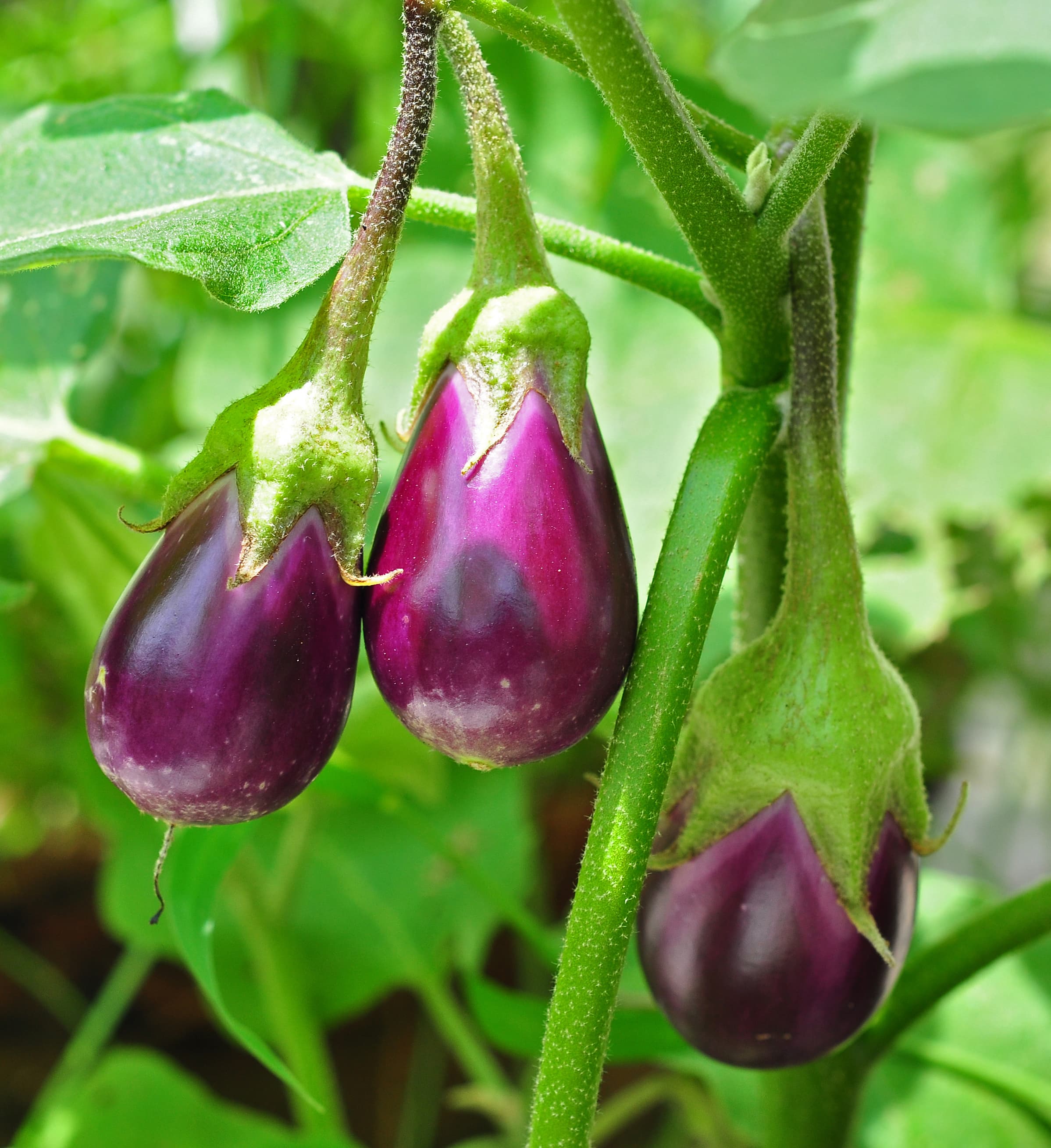
Which pot?
Ø 35 cm
~ 34 L potting soil
Give the plant room with a pot slightly wider than the current rootball, with matching depth.
Watering
daily in heatwaves
once a week
Always use a pot with drainage holes. Water dries out faster in pots — or the plant drowns. Check weekly with your finger: only water when the top 2 cm of soil is dry.
Pot care
Aubergines have high water needs and consistent moisture is critical from planting through to harvest. Water deeply two to three times per week during dry spells, increasing to daily watering in hot weather, particularly for container-grown plants. The soil should remain evenly moist but never waterlogged; erratic watering causes blossom-end rot and bitter, misshapen fruits. Mulching helps enormously with moisture retention. Feed generously throughout the growing season. Once the first fruits begin to swell in June, apply a high-potash liquid tomato fertiliser every week or ten days, continuing through July and August until harvesting winds down. This supports flower and fruit development. Avoid high-nitrogen feeds, which promote leafy growth at the expense of fruiting. Aubergines cannot overwinter outdoors in temperate Europe—they are killed by the first frost. Treat them as annuals and clear plants away in October or early November once cropping finishes. If growing under cover, you may extend the season slightly, but even then they will not survive winter cold. Watch for glasshouse red spider mite and whitefly, especially under cover; both thrive in warm, dry conditions. Increase humidity and consider biological controls if infestations develop. Aphids can cluster on shoot tips in early summer—squash by hand or spray with soapy water. Outdoors, flea beetles may pepper young leaves with holes; cover plants with fleece immediately after planting if this is a known problem. Botrytis (grey mould) can occur in damp, poorly ventilated conditions, so ensure good spacing and remove any rotting leaves or fruits promptly.
Pot-specific tip: add slow-release fertiliser pellets in March — potting soil exhausts much faster than open ground.


